New Study Proposes Robust Framework to Measure Sri Lanka’s Digital Economy
New Study Proposes Robust Framework to Measure Sri Lanka’s Digital Economy
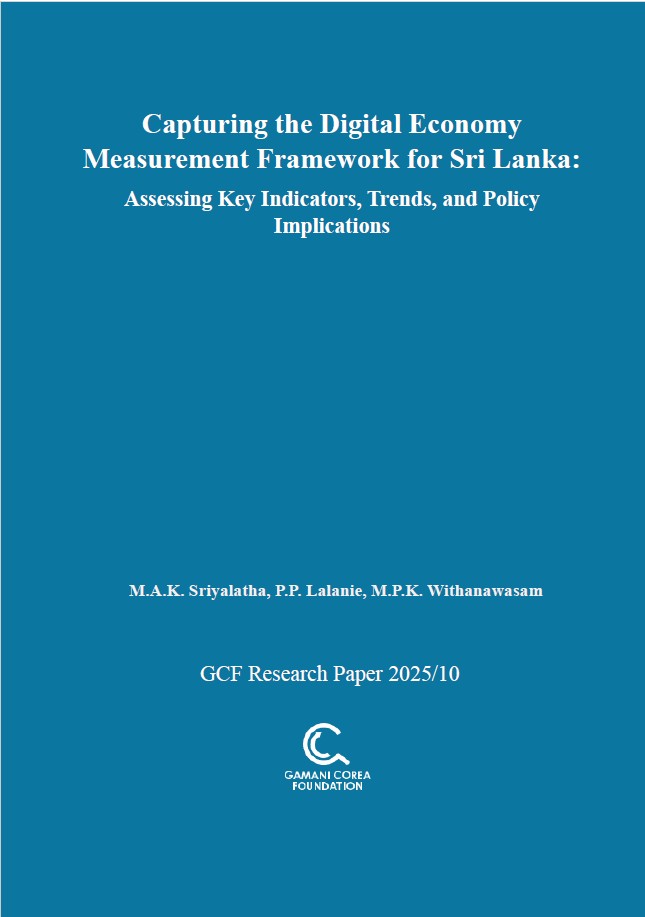
A new peer-reviewed research study titled “Capturing the Digital Economy Measurement Framework for Sri Lanka: Assessing Key Indicators, Trends, and Policy Implications” presents one of the most comprehensive attempts to quantify Sri Lanka’s digital economy using an internationally aligned analytical framework.
Authored by Prof M.A.K. Sriyalatha, Dr P.P. Lalanie, and Dr M.P.K. Withanawasam, the study was financed by a Research Grant from the Gamani Corea Foundation and formally presented at the Inaugural Research Conference of the Gamani Corea Foundation, held at the Bandaranaike Memorial International Conference Hall (BMICH), Colombo, on 28 November 2025.
Addressing a Critical Policy Gap
Despite rapid growth in digital infrastructure, mobile connectivity, and digital financial services, Sri Lanka has lacked a standardized and policy-relevant method to measure the digital economy’s contribution to national output. This study responds to that gap by developing a Digital Economy Measurement Framework (DEMF) tailored to Sri Lanka’s economic structure and data availability.
Using the country’s latest Input–Output tables and drawing on global best practices from institutions such as the Asian Development Bank (ADB) and the OECD, the authors estimate the size of the digital economy under alternative definitions—ranging from narrow sectoral measures to more comprehensive, weighted approaches.
Key Findings
- Sri Lanka’s digital economy remains modest in size, though its impact extends well beyond core ICT sectors
- Measurement results vary significantly depending on definitions, highlighting the importance of methodological clarity
- A weighted, expanded framework provides the most realistic estimate of digital GDP contribution
- Digitalization generates strong spillover effects across traditional sectors such as finance, manufacturing, transport, and services
The study underscores that without a credible measurement system, national targets—such as increasing the digital economy’s contribution to 15% of GDP by 2030—will be difficult to plan, monitor, or achieve.
Policy Relevance
The research offers clear recommendations for policymakers, including:
- Institutionalizing digital economy measurement within national accounts
- Aligning digital infrastructure and skills investments with measurable economic outcomes
- Using digital GDP metrics to guide development planning, regulation, and public investment
By providing an evidence-based foundation, the study strengthens Sri Lanka’s capacity to design and evaluate digital economy policies more effectively.
About the StudyThis research forms part of the Gamani Corea Foundation Research Paper Series (2025/10) and contributes to national and regional discussions on digital transformation, inclusive growth, and development economics.
Read More:
https://drive.google.com/file/d/1dqqdTKbbUMgtuKSH7XkqtRmpbOa1VoKD/view