Master of Science in Business Economics (MSc (BEc))
Programme Objectives
The general objective of this programme is to impart economics skills and managerial skills, necessary to deal with the challenges posed by the increasingly complex and rapidly changing business environment. The specific objectives of this programme are three-fold:- Guide corporate/public sector employees to make rational business/policy decisions.
- Promote employment in National and International Organizations by providing opportunities to acquire the required postgraduate qualifications.
- Guide graduate students to pursue their Doctoral studies.
Programme Structure
This programme offers two pathways for its applicants: the Specialisation Pathway and the General Programme.Specialisation Pathway
The Specialisation Pathway is designed for students who wish to develop expertise in a selected area of economics and pursue academic, research, policy, or international careers. Students select a specialisation area at the beginning of the programme. In Year I, students complete core courses and choose optional subjects from the relevant subject basket related to their specialisation. In Year II (First Semester), students follow advanced courses in their chosen specialisation area, followed by a substantial research component.
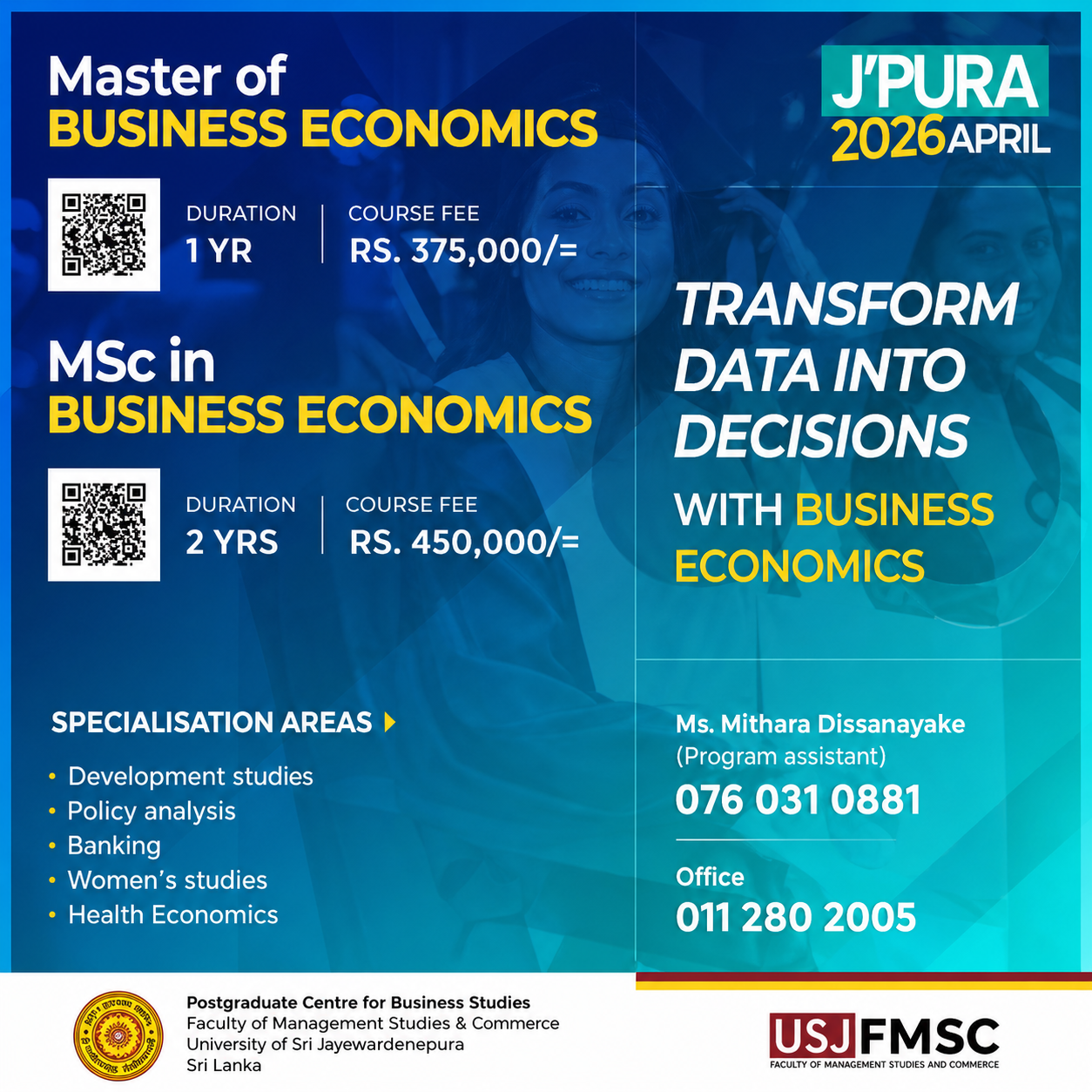
Specialisation Areas
General Programme
The General Programme is designed mainly for students employed in the public and private sectors. This pathway provides broad training in applied economics and emphasizes the practical application of economic knowledge.
During the second year, students participate in guest lectures and workshops conducted by academics and practitioners, focusing on current economic issues and real-world applications. Students also complete an individual project, which provides practical experience in planning and implementing applied economic studies.
This pathway is particularly suitable for students seeking to enhance their professional skills and career development.
View Programme StructureMaster of Science in Business Economics – 2026 October Intake
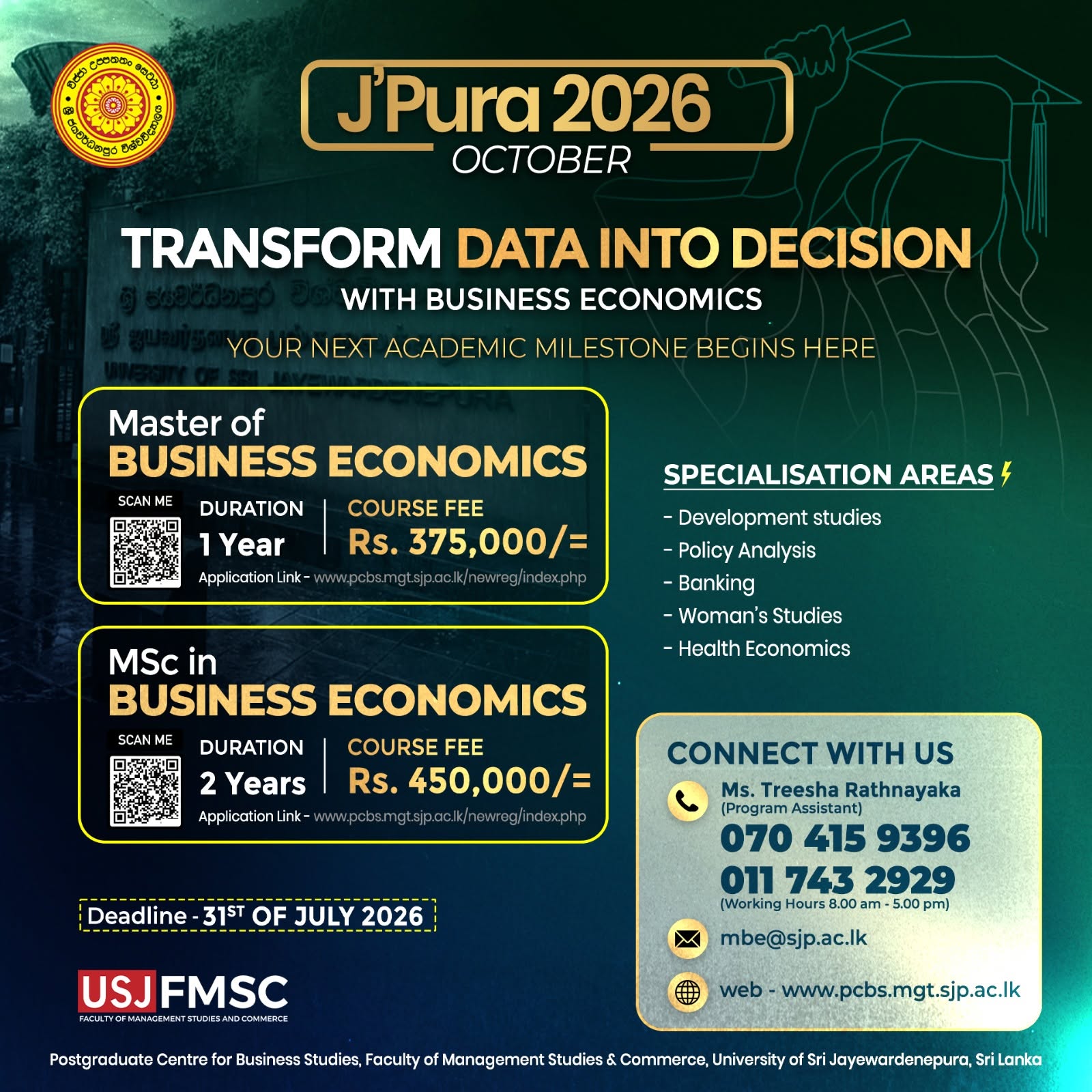
New Intake: Applications are now open for 2026 October Intake.
- Duration: 2 Years
- Course Fee: LKR 450,000
- Apply Before: 15th August 2026
For More Information
Senior Lecturer
Department of Business Economics, FMSC, USJ
Office: +94 11 2 802 005
Email: d.siriwardhane@sjp.ac.lk